
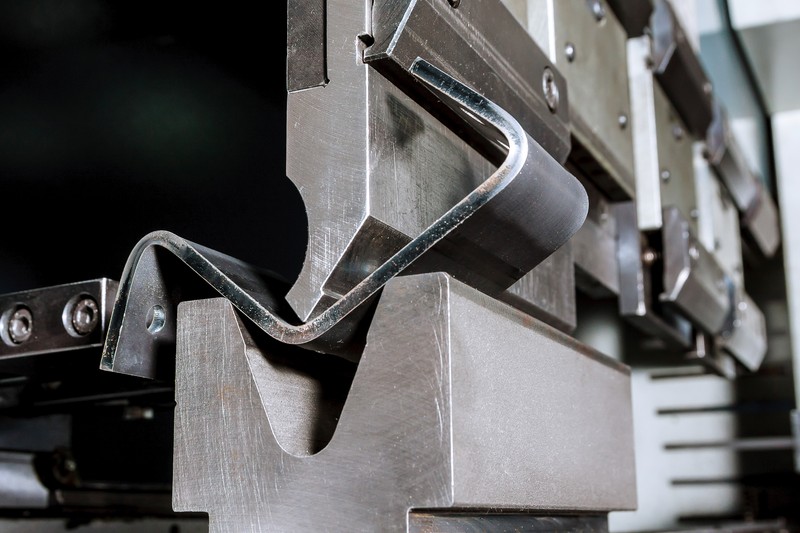
What Buyers Should Know About Precision Metal Bending Before Ordering Custom Parts
Quick Summary
A bend angle on a drawing depends on more than the number itself. Material thickness, grain direction, and springback all affect whether a sheet holds its final shape, and getting these variables wrong results in parts that don’t match the drawing on the first run. Multi-bend parts carry added risk, since small errors in an early bend compound at each subsequent bend. Keeping bending, shearing, punching, and welding under one roof reduces handoffs where accuracy tends to slip.
Ordering a custom bent part looks simple on paper. A flat sheet goes in, a bent shape comes out, and the angles match the drawing. In practice, precision metal bending involves a handful of variables that can throw off a part if they’re not accounted for early, before the job ever reaches a press brake.
Buyers who understand these variables in advance tend to achieve better results and fewer surprises when parts arrive. Here’s what’s worth knowing before placing an order.
Why Precision Metal Bending Depends on More Than the Angle
A bend angle on a drawing looks like a fixed number, but getting a sheet to hold that angle consistently depends on several factors working together. Material type, thickness, grain direction, and the tooling used all affect how a sheet responds once pressure is applied.
Metal doesn’t bend evenly at the exact point of contact. It stretches slightly on the outside of the bend and compresses on the inside; the extent of movement depends on the material’s properties. Steel behaves differently from aluminum, and even within steel, different grades spring back by different amounts once the press releases. A shop that accounts for this during setup, rather than adjusting after the fact, tends to produce parts that match the drawing on the first run, not the third.
What Affects the Outcome of Precision Sheet Metal Bending
A few variables recur in bending work, and buyers benefit from knowing what they are before a quote comes back.
- Material thickness: Thicker material resists bending more and requires higher tonnage, which affects tooling choice and the minimum achievable bend radius.
- Grain direction: Bending across the grain versus with it affects how the material stretches and can affect whether a sheet cracks along the bend line.
- Springback: Metal doesn’t hold a bend where the tooling stops. It relaxes slightly afterward, so the tooling needs to overbend by a calculated amount to land on the correct final angle.
- Bend radius: A radius that’s too tight for a given material thickness can lead to cracking, especially with harder alloys or thicker gauges.
Getting these details right during setup avoids costly rework later, particularly on parts where multiple bends need to line up with holes or features cut earlier in the process.
High Precision Positioning Sheet Metal Bending on Multi-Bend Parts
Parts with a single bend are relatively forgiving. Parts with several bends in sequence carry more risk, since each bend slightly shifts the part’s position, and small errors can compound across the sequence. A part that requires four bends to form a bracket depends on the first bend being correct. Every subsequent bend is measured relative to the previous ones.
This is where tooling and machine capability matter. A press brake with reliable back gauges and consistent positioning keeps each bend aligned to the last, even on parts with tight tolerances between features. Without that consistency, a bracket meant to bolt onto flat mounting holes might come out slightly twisted, causing fit problems during final assembly.
Where Bending Fits Into a Larger Fabrication Process
Bent parts rarely stand alone. A bracket might start as sheared flat stock, be punched with mounting holes, and then be moved to a press brake for its final shape. Keeping these steps under one roof means a part moves through bending and forming services without accuracy being lost between separate vendors. The same team that cut the flat pattern also knows how the material behaves under a press brake.
Gauer Metal Products, Inc. performs bending in-house, along with shearing, punching, and welding. This keeps a multi-step part on schedule and gives engineering a single point of contact if a dimension needs to be adjusted partway through.
Getting Custom Bent Parts Right the First Time
Precision metal bending has more moving parts than a flat drawing suggests, from material behavior to tooling to how bends stack across a multi-bend part. Buyers who ask the right questions before ordering and work with a shop that accounts for these variables during setup tend to get parts that match the drawing without a second round of adjustments.
If a project involves custom bent parts or a design with multiple bends that need to align precisely, reach out to our team to talk through what the job requires.
FAQs
What factors affect the outcome of a metal bend?
Material thickness, grain direction, springback, and bend radius all play a role. Each one affects how a sheet responds under a press brake and whether the final angle matches the drawing.
Why does springback matter in precision bending?
Metal relaxes slightly after a press brake releases it, so the final angle isn’t exactly where the tooling stopped. Tooling needs to account for this by overbending a calculated amount.
Are multi-bend parts riskier than single-bend parts?
Yes. Each bend in a sequence is measured relative to the ones before it. A small error in an early bend can shift the positions of every subsequent bend.