
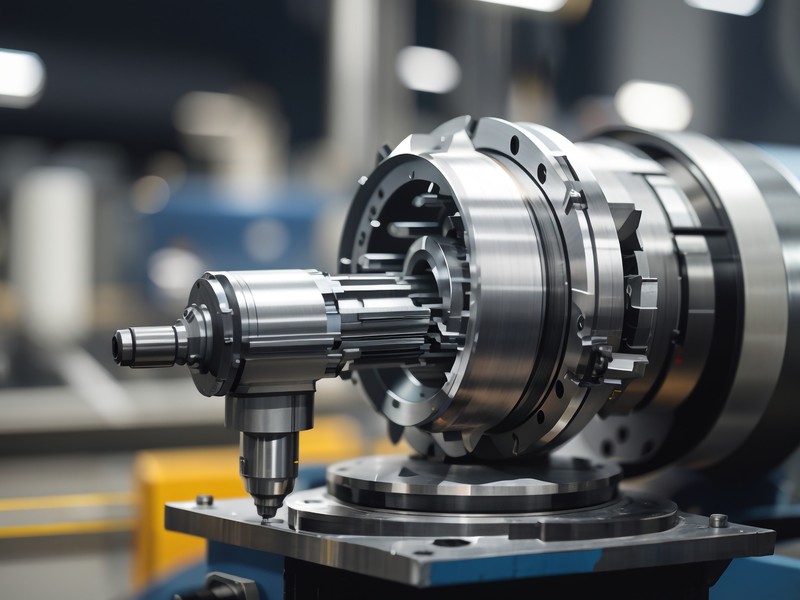
How CNC Turning Supports High-Volume Manufacturing
Quick Summary
CNC turning maintains high-volume production accuracy by removing material with repeated, computer-controlled cuts, so parts stay consistent from the first piece to the last. Volume magnifies small tolerance issues into real costs, which is why tool wear, material consistency, and setup accuracy carry so much weight in a turning operation. In-house capability, alongside processes such as milling and finishing, reduces handoffs and maintains accurate dimensions across an entire assembly. Turned parts also need checkpoints throughout a run, not just a final inspection, to catch problems before they scale.
Precision parts don’t happen by accident. Every shaft, pin, bushing, and fitting that goes into a machine started as raw stock before a lathe removed material in careful, repeated cuts. That process is CNC turning, and it plays a bigger role in daily production than people outside the shop floor tend to realize.
Round parts show up in almost every industry, from automotive assemblies to hydraulic systems to food processing equipment. Turning is often the fastest and most reliable way to produce these parts with tight tolerances held from the first piece to the thousandth. In a high-volume run, that kind of repeatability is the whole point.
What CNC Turning Services Cover
CNC turning starts with a piece of round or cylindrical stock, usually metal, held in a rotating spindle. A cutting tool moves along the length of the material, removing layers until the part matches the programmed dimensions. Because the process is computer-controlled, the same cuts are repeated on part after part without drift.
Shops that run CNC turning services can produce shafts, sleeves, bushings, spacers, and threaded components in a wide range of metals, including steel, aluminum, and stainless steel. The programming can also handle more detailed profiles, tapers, grooves, and internal bores, all in one setup rather than several separate operations.
Why High-Volume Runs Depend on Precise Cuts
Volume changes the math on a production floor. A tolerance issue that shows up once in a hundred parts might be an annoyance. That same issue, showing up once in ten thousand parts, becomes a real cost in scrapped material, rework hours, and downstream assembly delays.
CNC turning holds up under that pressure because the process doesn’t rely on a machinist eyeballing each cut. Once a program is set and verified, it runs the same path every time. This is part of why turning pairs well with CNC milling on parts that need both a round profile and flat or angled features machined into them. Turning handles the cylindrical geometry, milling handles the rest, and both processes deliver the same repeatable accuracy.
A few things matter most when volume climbs:
- Tool wear management: Cutting tools dull over long runs, and a good program accounts for that with scheduled tool changes so early parts and late parts still match.
- Material consistency: Stock variation, even small differences in hardness or diameter, can throw off a cut, so incoming material gets checked before it reaches the lathe.
- Setup accuracy: A small error in how a part is held can compound over a run, so fixturing is dialed in before production starts, not adjusted mid-batch.
Materials and Parts Suited to CNC Turning Services
Not every part benefits equally from turning, but many common components do. Parts with a round or cylindrical profile tend to be the best fit, since the lathe is built around rotating the material as it cuts. This makes turning a natural choice for components that need to fit into a bore, slide along a shaft, or thread into another part.
Some examples worth knowing:
- Shafts and axles: Used across motors, pumps, and drivetrain assemblies where a straight, round profile is required.
- Bushings and sleeves: Often needed in bearing housings or as wear surfaces between moving parts.
- Fittings and connectors: Round threaded pieces used in plumbing, hydraulic, and pneumatic systems.
- Custom pins and spacers: Smaller components that still need tight dimensional control to fit correctly into an assembly.
Materials commonly turned include carbon steel, stainless steel, aluminum, and brass, each chosen based on strength, corrosion resistance, or weight needs for the finished part.
Where Precision CNC Turning Fits in a Production Line
A single turned part rarely stands alone. It usually feeds into a larger assembly, alongside welded frames, formed sheet metal, or custom-formed metal shapes that make up the rest of a system. When turning is handled in-house alongside these other processes, there’s less back-and-forth between vendors and fewer chances for a dimension to get lost in translation.
At Gauer Metal Products, Inc., every stage of production happens under one roof, from raw material through finished part. Our setup helps keep timelines predictable and gives engineering teams a single point of contact when a design needs a small adjustment partway through a run. It also means that a part moving from one process to a secondary process, like deburring or plating, doesn’t sit in transit between facilities.
Quality Checks That Keep Parts Consistent
Even a well-programmed lathe needs verification along the way. Most shops running turned parts at volume build in checkpoints rather than inspecting only at the end. First-article inspection confirms that the initial part matches the drawing before the full run starts. Periodic in-process checks catch tool wear or drift early, before it affects a large batch. Final inspection confirms the finished parts meet spec before they ship.
These checks don’t slow production down when they’re planned into the process from the start. They catch small issues before they become expensive ones. They also give engineering teams a paper trail if a part ever needs to be traced back to a specific run or lot.
What to Look for in a Turning Partner
Choosing a shop for a high-volume turning job comes down to a few practical questions. Some worth asking before committing to a vendor:
- In-house capability: Does the shop handle turning alongside other processes like milling, welding, or finishing, or does the part need to travel between vendors?
- Domestic production: For many industries, knowing where a part is made and to what standards it is made matters as much as the part itself.
- Track record: How long has the shop been doing this kind of work, and can it demonstrate consistent results over long production runs?
- Communication: Does engineering get a direct line to the people running the machines, or does every question go through several layers first?
A shop that’s been doing this for decades, with everything produced domestically and in-house, tends to answer these questions without much hesitation.
A Partner Worth Trusting for Every Run
CNC turning isn’t flashy, but it’s one of the quiet processes holding high-volume manufacturing together. Getting it right means fewer delays, less scrapped material, and parts that fit the way they’re supposed to, run after run.
Does your project call for turned parts at scale, or any part of an assembly that needs precision and a domestic source? Reach out to the team at Gauer Metal Products, Inc. to talk through what the job needs.
FAQs
What is CNC turning used for?
CNC turning shapes round or cylindrical parts like shafts, bushings, sleeves, and fittings. A rotating spindle holds the material while a cutting tool removes layers to match a programmed design.
Why does precision matter more in high-volume production?
A small tolerance issue barely noticed in a single part turns into scrapped material and rework costs when repeated across thousands of parts. Precision keeps that risk out of the process entirely.
What materials work best for CNC turning?
Carbon steel, stainless steel, aluminum, and brass are all commonly turned. The choice depends on the part’s function, strength requirements, and corrosion resistance needs.
How does CNC turning work alongside CNC milling?
Turning handles cylindrical geometry, while milling adds flat or angled features to the same part. Running both processes together keeps a part accurate without switching between separate vendors.
What should a company look for in a CNC turning partner?
In-house capability, domestic production, a long track record, and direct communication with the machining team all matter. These factors keep a project on schedule and dimensionally accurate.