
CNC Milling Vs. CNC Turning: Which Do You Need?
Quick Summary
Turning and milling solve different shape problems, so the right choice depends on a part’s geometry rather than on a preference between processes. Round, symmetrical parts with rotational function belong on a lathe, while parts with flat faces, angles, or features on multiple sides need a mill. Plenty of components need both, with turning shaping the round geometry first and milling adding flat or angled features afterward. Having both capabilities under one roof keeps a multi-process part moving without extra handoffs between separate vendors.
A drawing lands on an engineer’s desk and one question comes up almost immediately. Does this part need to be milled or turned? The answer shapes everything downstream, from lead time to tooling to how the part gets finished. Getting it wrong early on leads to delays later, so it helps to know what separates these two processes before a job is quoted.
CNC milling vs. turning isn’t really a competition between two methods, better or worse. Each one solves a different kind of shape problem, and knowing which fits a part comes down to geometry more than preference.
CNC Milling Vs. CNC Turning: What Separates the Two Processes
Turning spins the workpiece while a stationary cutting tool removes material along its length. It’s the natural choice for round, cylindrical parts like shafts, pins, and bushings, since the rotation itself does most of the shaping work.
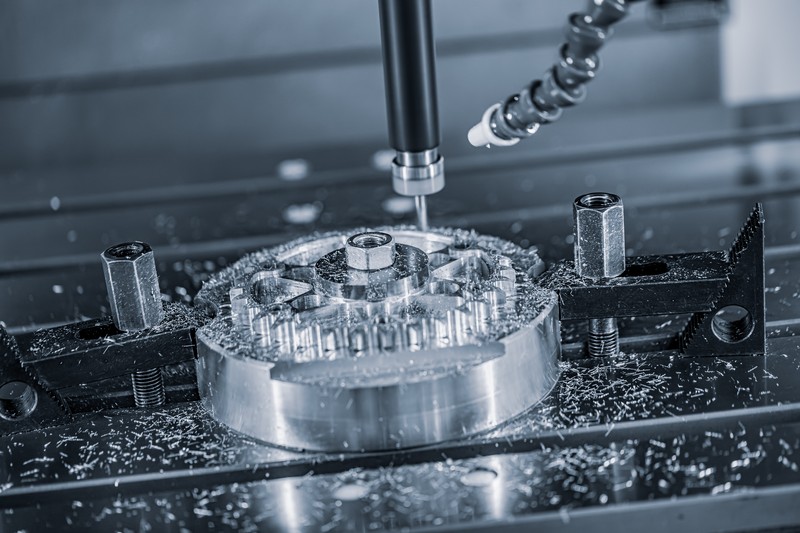
Milling works the opposite way. The part stays still while a rotating cutting tool moves across it, removing material to create flat surfaces, slots, pockets, and holes. Milling handles geometry that turning simply can’t reach: angles, contours, and features cut into multiple sides of a part.
A quick way to think about it: if a part looks like it came off a lathe, round and symmetrical around a center axis, turning is likely the answer. If a part has flat faces, corners, or features on more than one plane, milling takes over.
When a Part Calls for Turning
Round parts dominate this category. Shafts, sleeves, spacers, and threaded fittings all rely on turning because their geometry is built around a center axis. A lathe can hold tight tolerances on diameter and roundness across an entire run, which matters for parts that need to fit into bearings or rotate without wobble.
Turning also handles tapers, grooves, and internal bores in a single setup, which keeps a part accurate without moving it between machines. A shaft that needs a shoulder, a groove, and a threaded end can often go through all three features in a single lathe pass.
Some signs a part belongs on a lathe:
- Round or cylindrical shape: The part is symmetrical around a single axis, with no flat faces on the outside diameter.
- Rotational function: The part spins, slides, or fits into a bore during its final use.
- Consistent diameter tolerance: The drawing calls out tight control on roundness or outside diameter across the length of the part.
When a Part Calls for Milling
Flat surfaces, angled cuts, and multi-sided features point toward milling. Brackets, housings, plates, and any part with holes drilled at different angles need a machine that can reposition the cutting tool relative to a stationary workpiece.
CNC vertical and horizontal milling services cover a wide range of this work, since vertical mills handle flat-face cutting and pocketing. Horizontal setups work well for parts that need material removed from more than one side without repositioning the workpiece each time.
A part with a mix of flat surfaces, drilled holes, and internal pockets almost always needs milling, since a lathe has no practical way to cut those features.
Parts That Need Both Processes
Plenty of components don’t fit neatly into one category. A shaft might need a flat keyway cut into an otherwise round profile. A round housing might need flat mounting faces machined into its side. These parts move between a lathe and a mill during production, with turning handling the round geometry and milling adding the flat or angled features afterward.
This is a common enough scenario that shops offering CNC turning services alongside milling capability save engineering teams a step. Instead of coordinating between two vendors for one part, both processes happen under a single roof, with a single point of contact if a dimension needs adjusting mid-run.
Gauer Metal Products, Inc. runs both turning and milling in-house, along with shearing, welding, and finishing work, which keeps a multi-process part moving without extra handoffs between separate shops.
A Few Questions That Help Decide
Engineers reviewing a new design can ask a handful of questions early on to figure out which process, or combination, fits best.
Is the part symmetrical around a single axis, or does it have flat faces and angles? Does the part’s function involve rotation, or does it bolt onto something else along a flat surface? Are there features on more than one side of the part that would require repositioning on a lathe but not necessarily on a mill?
Answering these questions before a part goes out for a quote saves time later. A shop that knows upfront whether a job needs turning, milling, or both can plan tooling and setup accordingly.
Choosing the Right Process for Your Part
CNC turning vs. CNC milling isn’t a decision that needs to be complicated. Round, rotational parts point toward a lathe. Flat, multi-sided parts point toward a mill. Anything in between likely needs both, run in sequence rather than in isolation.
Knowing which process a part needs before it goes into production keeps timelines predictable and avoids surprises once machining starts. Contact us to talk through the details today if a project involves a part that needs both processes handled without extra handoffs.
FAQs
What’s the main difference between CNC milling and CNC turning?
Turning spins the workpiece while a stationary tool cuts along its length; it is suited to round parts. Milling keeps the part still while a rotating tool cuts flat surfaces, slots, and angled features.
How do I know if my part needs to be turned instead of milled?
If a part is round and symmetrical about a single axis, and has a rotational function, it likely belongs on a lathe. Flat faces or features on multiple sides point toward milling instead.
Can a single part need both turning and milling?
Yes. A round shaft with a flat keyway, or a round housing with flat mounting faces, often moves between a lathe and a mill during production to obtain both features.
What kinds of parts are best suited for CNC turning?
Shafts, sleeves, spacers, and threaded fittings are common examples, since their geometry is centered on a central axis and benefits from a lathe’s tight control over diameter and roundness.
Why does it help to have milling and turning under one roof?
Coordinating a part between two separate vendors adds handoffs and risk of mismatched dimensions. Keeping both processes in-house gives engineering a single point of contact throughout the production process.