
5 Costly Production Problems That CNC Machining Services Help Solve
Quick Summary
Small issues, parts drifting out of tolerance, designs that don’t translate cleanly to machining, and late-stage inspection failures tend to become expensive problems the longer they go unnoticed. Consistent programming and scheduled tool changes keep parts in close tolerance over a long run, while early design reviews catch features that would cause trouble on the shop floor. In-process checks catch drift before it affects a full batch, and keeping multiple processes under one roof reduces handoffs where errors creep in. Planning toolpaths with material yield in mind also keeps waste from adding unnecessary cost to a run.
A production run rarely fails all at once. It’s usually a small issue, a part that’s slightly out of tolerance, a batch that doesn’t match the sample approved months ago, a design that looked fine on paper but doesn’t hold up in use.
These issues cost money in ways that don’t always show up until parts are already in the field. CNC machining services help catch these problems before they become expensive.
CNC Machining Services and Where They Fit Into Production
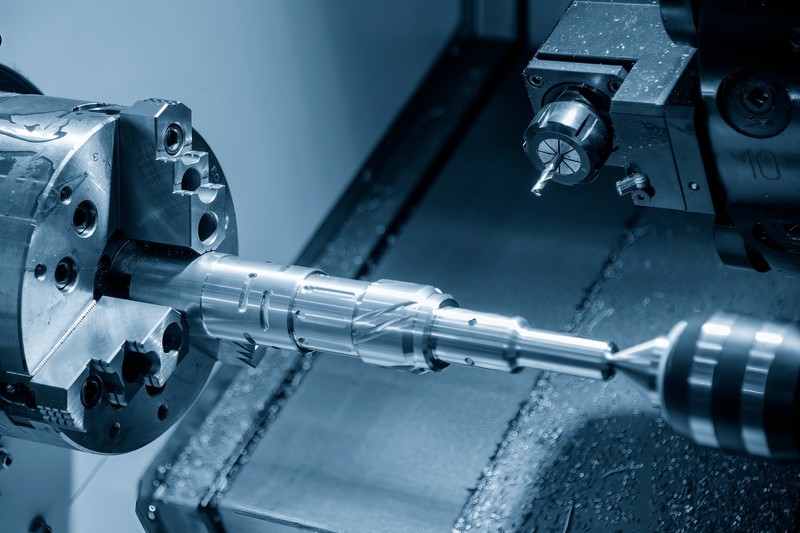
CNC machining covers a range of processes, including turning, milling, drilling, and finishing, each suited to different part geometries and tolerances. What ties them together is consistency. A programmed toolpath removes material the same way on part one and part one thousand, which is why these processes show up across nearly every industry that depends on precision parts.
Here are five production issues that often arise and how machining processes help keep them from turning into bigger headaches.
1. Parts That Drift Out of Tolerance Across a Run
A single part might match a drawing perfectly. The concern arises when part five hundred no longer matches part one. Manual processes introduce small variations from one piece to the next, and over a long run, those small variations add up to real inconsistency.
CNC machining services address this by running the same programmed path on every part, regardless of how many pieces have already been machined. Tool wear still happens over time, but a shop that tracks wear and schedules tool changes accordingly keeps part five hundred as close to part one as the tolerance allows.
2. Designs That Don’t Translate Well From Drawing to Part
A part that looks straightforward on a CAD file sometimes runs into trouble once it reaches the shop floor. A tight internal corner, a wall that’s too thin for the material, a feature that needs a tool small enough to reach it without breaking. These issues get expensive fast if they’re discovered after a batch has already started.
Custom CNC machining services often include a design review step before production begins, catching features that would cause problems during machining. A quick conversation between engineering and the shop floor before the first part is cut saves the cost of scrapping an entire run due to a feature that could have been adjusted early.
3. Rework Costs From Parts That Fail Inspection Late
Finding a defect at final inspection, after a part has gone through every step of production, costs more than catching it early. Rework at that stage sometimes means the part gets scrapped entirely, especially if a dimension is off by more than a small adjustment can fix.
A few checkpoints reduce how often this happens:
- First article inspection: Confirms the first part of a new setup matches the drawing before the full run continues.
- In-process checks: Catch tool wear or drift partway through a run, before it affects a large batch of parts.
- Final inspection: Confirms finished parts meet spec, but works best as a last check rather than the only one.
Building these checkpoints into a process, rather than relying on a single inspection at the end, keeps a small issue from turning into a scrapped batch.
4. Multiple Vendors Introducing Errors Between Handoffs
A part that needs turning, milling, and finishing sometimes travels among three separate shops to complete all three steps. Every handoff between vendors is a chance for a dimension to get lost, a specification to get misread, or a delay to creep into the schedule.
Precision CNC machining services that combine multiple processes under one roof reduce these handoffs. A part that moves from a lathe to a mill without leaving the building keeps the same team accountable for the entire process.
Gauer Metal Products, Inc. runs turning, milling, and finishing processes in-house, alongside broader custom metal fabrication services like shearing, welding, and heat treating. Keeping these steps together means fewer vendors touching a single part before it’s finished.
5. Material Waste From Inefficient Programming
Every part cut from raw stock leaves some material as scrap, but how much is wasted depends heavily on how the job is programmed. A poorly planned toolpath wastes material and machine time, while a well-planned one yields more usable parts from the same amount of stock.
This matters more on runs involving expensive materials like stainless steel or specialty alloys, where wasted stock adds up quickly across a large batch. A shop experienced in CNC machining services plans nesting and toolpaths with material yield in mind, keeping costs down without cutting corners on part quality.
Catching Problems Before They Become Costly
These five problems are common across nearly every type of production run and industry that relies on machined parts. The difference lies in identifying and addressing them early through good programming, in-process inspections, and a manufacturing setup that keeps multiple processes under one roof. When issues go unnoticed until later in production, the cost and complexity of fixing them often increase.
Projects involving tight tolerances, complex geometries, or designs that would benefit from a manufacturability review deserve careful planning from the outset. Connect with us to discuss your requirements and determine the best approach before production begins.
FAQs
Why do parts drift out of tolerance across a long production run?
Manual processes introduce small variations from piece to piece, and tool wear adds up over time. Consistent programming and scheduled tool changes keep later parts as close as possible to the first.
Why does a design review before production matter?
Features that look fine on a drawing sometimes cause problems during machining, like a corner too tight for available tooling. Catching this early avoids scrapping an entire run over an adjustable issue.
What’s the benefit of in-process inspection over final inspection alone?
Final inspection catches issues after a part is already finished, when rework is more costly. In-process checks catch tool wear or drift partway through a run, before it affects a larger batch.