5 Types Of Warehouse Racking Systems For High-Volume Inventory
Quick Summary
Selective, drive-in, push-back, carton flow, and cantilever racking each balance storage density against access speed differently, and no single system covers every need in a high-volume facility. Selective racking suits varied SKUs with moderate turnover; drive-in and push-back racking maximize bulk storage; carton flow speeds up high-turnover picking; and cantilever racking handles long or irregular items. Most facilities combine two or more of these systems across different zones based on how each product actually moves.
The wrong racking system for a high-volume facility can create problems that show up months after installation, once the layout is already in place and hard to change. Types of warehouse racking vary widely in how they handle weight, access, and pick frequency, and matching the right system to the right zone makes a difference once order volume climbs.
Learn five common racking systems, what each handles well, and how to choose the right type for a given part of a warehouse.
Common Types of Warehouse Racking Explained
Racking systems aren’t interchangeable, even though they might look similar from a distance. Each type solves a different combination of problems around storage density, access speed, and product turnover.
A facility handling high-volume inventory often needs more than one racking type across its floor. Fast-moving zones near shipping call for something different from bulk storage areas holding slower-turnover products. Looking at each system individually helps clarify where it fits before committing to a layout.
1. Selective Pallet Racking
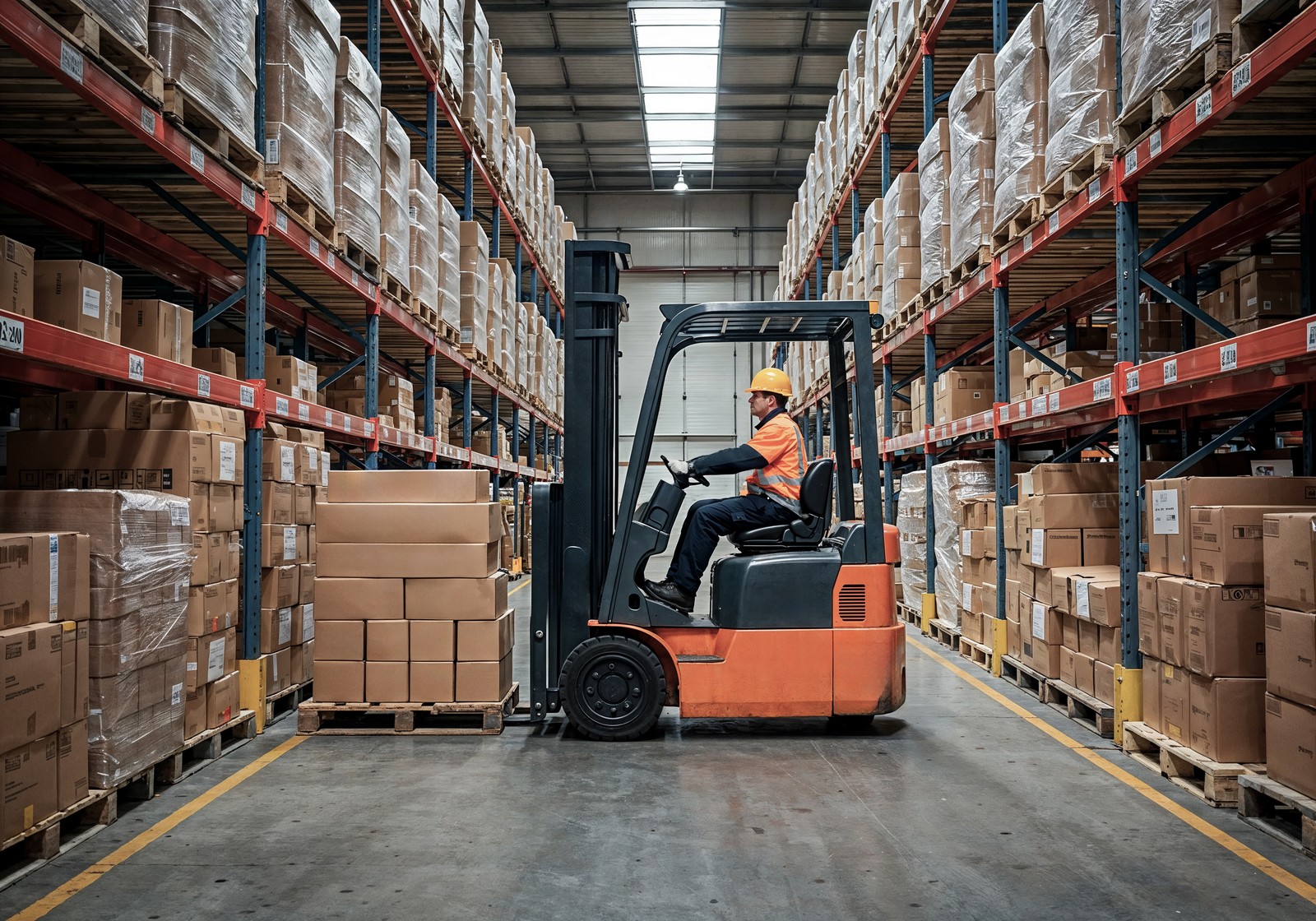
Selective pallet racking is the most common system found in warehouses of nearly every size. Pallets load onto horizontal beams supported by vertical frames, and forklifts access each pallet directly from the aisle.
This system works well because every pallet position is reachable without first moving other pallets. That direct access makes selective racking a strong fit for facilities with a wide variety of SKUs and moderate turnover on each one.
The tradeoff comes in storage density. Selective racking requires aisle space for forklift access, which means it uses floor space less efficiently than denser systems. For warehouses with ample square footage and diverse inventory, this trade-off rarely matters much.
2. Drive-In Racking
Drive-in racking eliminates the need for aisles by allowing forklifts to drive directly into the rack structure to place or retrieve pallets. Rails support the pallets rather than shelves, and forklifts navigate along the rails to reach deep storage positions.
This system maximizes storage density by eliminating the aisle space required by selective racking. Drive-in racking works best for bulk storage of a single SKU, since pallets are loaded and unloaded in a last-in, first-out order.
Facilities storing seasonal inventory or large quantities of a single product often turn to drive-in racking. The limited access pattern matters less when only one or two SKUs occupy each section.
3. Push-Back Racking
Push-back racking uses a sloped set of rails and a cart system that allows pallets to nest behind one another. Loading a new pallet pushes the previous one further back on the rail, and unloading pulls pallets forward one at a time.
This system offers a middle ground between selective and drive-in racking. It provides denser storage than selective racking while maintaining last-in, first-out access without requiring a forklift to drive into the structure itself.
Push-back racking suits facilities that need moderate storage density along with faster load and unload cycles than drive-in racking typically allows.
4. Carton Flow Racking
Carton flow racking uses gravity-fed rollers or wheels to move cartons from the loading side to the picking side of the rack. New stock loads from the back, and pickers pull from the front, which keeps the first-in, first-out rotation consistent without manual tracking.
This system fits high-turnover picking zones particularly well, since items remain accessible at a consistent height and restocking occurs without interrupting active picking. Our case flow rack systems use a gravity-fed approach with a post-supported design, keeping the space beneath each rack open for additional use.
Carton flow works best for zones with frequent picking activity rather than long-term bulk storage. The system prioritizes access speed over sheer storage density.
5. Cantilever Racking
Cantilever racking handles long or irregular items that don’t fit well on standard pallet racking. Horizontal arms extend from vertical columns without a front support, leaving the storage area open for items such as pipe, lumber, or metal bar stock.
This system solves a specific storage problem that other racking types don’t address well. Items with unusual dimensions need support along their length, and cantilever racking provides that support without boxing the item in on the sides.
Facilities handling raw material or long stock often rely on cantilever racking as a dedicated solution for that specific inventory category.
Comparing Storage Density and Access Speed
Each racking system balances storage density against access speed differently, and understanding that balance helps clarify which system fits a given zone.
- Selective racking: Lower density, immediate access to every pallet position
Drive-in racking: High density, last-in, first-out access with slower retrieval
Push-back racking: Moderate density, faster cycle time than drive-in
- Carton flow racking: Moderate density, fastest access for high-turnover picking
- Cantilever racking: Density depends on item length, built for irregular product shapes
A facility handling high-volume inventory rarely relies on a single system across the entire floor. Bulk storage zones might run on drive-in or push-back racking. Active picking areas benefit from carton flow, and irregular stock gets its own cantilever section.
Matching Racking Type to Facility Needs
Choosing between these systems comes down to a few core questions. How often does a given SKU need picking? Does the item fit standard pallet dimensions, or does it need cantilever support? Is floor space limited enough that storage density outweighs access speed?
Answering these questions for each zone of a facility produces a layout that handles high volume without unnecessary bottlenecks.
At Gauer Metal Products, projects that require a specific mix of racking types across an unusual footprint often benefit from custom fabrication. Custom metal fabrication capabilities allow racking components to fit the actual dimensions of a facility rather than forcing a standard layout into a space it wasn’t designed for.
Building a Racking Layout That Handles Volume
High-volume facilities rarely run on a single racking type, and the strongest layouts come from matching each zone to the system that fits its specific demands. Selective racking handles variety, drive-in and push-back racking handle bulk storage, carton flow handles fast picking, and cantilever racking handles irregular stock. Our warehouse shelving options give facilities the flexibility to combine these systems based on each zone’s specific needs.
Plan Your Racking Layout With Our Team
Every facility handles a different mix of products, turnover rates, and floor space, and the right racking layout accounts for all three. Our team at Gauer Metal Products works through these details with warehouse operators to determine which racking type best fits each facility zone.
Get in touch with our team to talk through which setup best fits your inventory today.
FAQs
What’s the difference between selective and drive-in racking?
Selective racking gives direct access to every pallet position from an aisle. Drive-in racking removes that aisle for higher-density storage, but pallets are loaded and unloaded in a last-in, first-out order.
Which racking type works best for fast-moving inventory?
Carton flow racking suits high-turnover picking zones well, since gravity-fed rollers keep items accessible at a consistent height. Restocking happens from the back without interrupting active picking.
Can cantilever racking store standard palletized products?
Cantilever racking is designed for long or irregular items, such as pipe or bar stock. Standard palletized products fit better on selective, drive-in, or push-back racking systems instead.